
Gratitude activities for ages 2–6
Little moments.
Lovely thank-yous.
Six playful ways to notice kindness, share a smile and say thank you. Pick a little adventure to try together.
Let’s play together ↓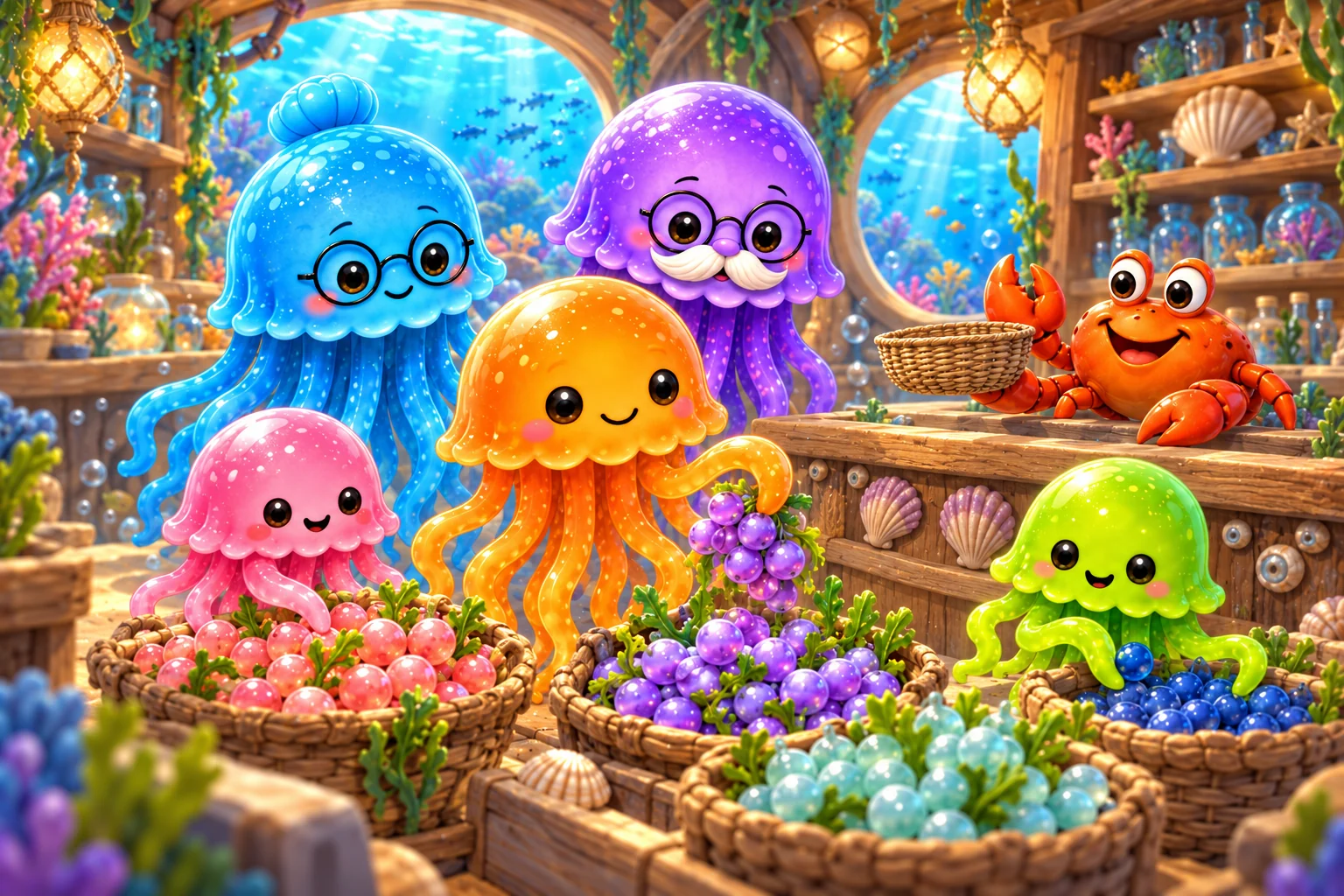
A little time together
Help them notice.
Let them find their own meaning.
For this guide, “meaning” means everyday things a young child can experience: being included, knowing their interests matter and seeing that a small action can help someone.
Start with one real moment and one gentle question. Follow your child’s response rather than working through a list. A point, a gesture, a drawing or “not now” is welcome.
These are invitations to connect, not lessons in being happy all the time. Age suggestions are flexible, not milestones.
How to make these moments meaningful
Be interested in their answer. If they choose a toy, a snack or a puddle, begin there. You can say, “Tell me about that,” without steering them towards an answer that sounds more grown-up.
Make care visible. “Your friend brought the cushion when you were tired.” Wonder together about what happened and how it felt; don’t tell them which feeling they should have.
Keep belonging unconditional. “I love being with you” needs no helpful action in return. Children do not have to earn care, repay a kindness or manage an adult’s feelings.
Pick one to begin
What shall we try today?
Six gratitude activities for toddlers and children aged 2–6. Choose whichever feels fun.
Notice the person behind the kindness
When someone helps, describe the actual moment. If a friend holds a box while your child fills it, pause together before moving on. Choose just one question; this is a conversation, not a quiz.
Try saying: “Mia held the box so your blocks didn’t fall. What was that like for you?”
Age tips & what to do if it’s tricky
What you’re practising: Connecting a helpful action with the person who did it and your child’s own feelings.
- Ages 2–3
- Describe what you can see: “Mia held it steady.” Let your child point, smile or continue playing. You can offer your own thanks.
- Ages 4–6
- If they are interested, ask, “What do you think Mia was trying to help with?” Treat their idea as a guess about another person’s thoughts, not a right-or-wrong answer.
- If it’s tricky
- If they shrug, leave it there: “I noticed she helped us.” Don’t repeat the question until they produce “thank you”.
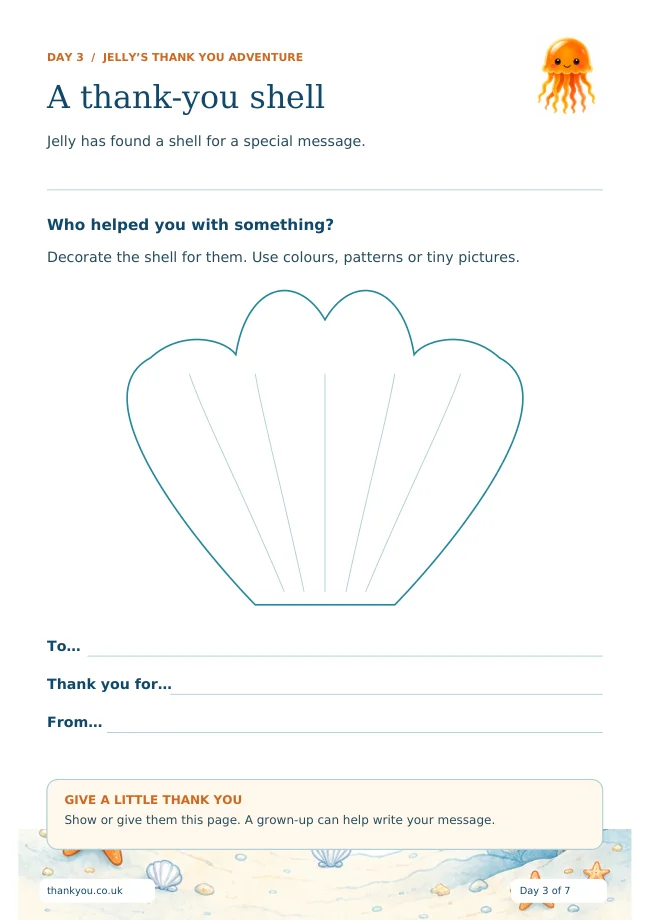
Make a thank-you shell
Draw a big shell outline on paper, or use our free printable. Invite your child to decorate it for someone who did a specific kind thing. They choose the colours and whether to give it away.
Try saying: “You said you liked Grandad fixing your train. Would you like to make him a shell picture?”
Age tips & what to do if it’s tricky
What you’re practising: Putting a personal experience into a picture or message; the meaning matters more than a neat result.
- Ages 2–3
- Offer two crayons and let them make marks. You might add, “Thank you for fixing my train,” if they want you to.
- Ages 4–6
- Ask what they would like the person to know. Write their exact words, even if the message is short or surprising.
- If it’s tricky
- If they want to keep it or draw something else, that is fine. Offer a wave or a spoken message another time; the craft is not a debt to repay.
Share a small discovery
Let your child choose one thing to show you: a leaf’s pattern, a moving shadow or a favourite colour. Look together for a few moments. This is appreciation and shared attention; it needn’t be a thank-you exercise.
Try saying: “You spotted that stripe. Show me the part you like.”
Age tips & what to do if it’s tricky
What you’re practising: Sharing something personally interesting with an attentive adult.
- Ages 2–3
- Follow a glance, gesture or sound. Name one detail and pause to see whether they want to continue.
- Ages 4–6
- Ask, “What caught your attention?” They might describe, draw or compare it with something familiar.
- If it’s tricky
- If a busy outdoor setting feels uncomfortable, choose a familiar object indoors. No touching, eye contact or spoken answer is required.
Find out what would actually help
Make a toy’s tower fall over. A second toy wants to help but doesn’t know how. Let your child decide what the first toy wants: rebuilding together, a little space or someone to sit nearby.
Try saying: “Bear looks disappointed. Shall Rabbit ask, ‘Would you like help, or shall I wait?’”
Age tips & what to do if it’s tricky
What you’re practising: Exploring that someone else may want something different from what we would choose.
- Ages 2–3
- Act out one simple offer, then follow their play. They can move the toys without having to explain.
- Ages 4–6
- Swap roles. Let Bear accept or decline, and ask what Rabbit could do next. If help is wanted, show exactly how it helps.
- If it’s tricky
- If Bear says no, let Rabbit respect it. Kindness does not require giving up a toy, accepting a hug or saying yes to unwanted help.
Give them a real part to play
Invite your child to contribute to something shared: lay out napkins for a snack, carry a light book to storytime or hold a picture while you tape it. Offer a manageable role and help when needed.
Try saying: “Would you like to put out the napkins or carry the book?” Afterwards: “You put a napkin by each place. Now everyone has one.”
Age tips & what to do if it’s tricky
What you’re practising: Seeing a concrete result of their contribution, with room to choose how to take part.
- Ages 2–3
- Do one part side by side: you carry the pile; they place one napkin. Describe what happened without expecting a perfect job.
- Ages 4–6
- Ask them to spot a small job that would help the group, then check together that it is useful and manageable.
- If it’s tricky
- If it is too hard, make the job smaller. If they decline this optional activity, move on. Avoid a “kindest child” contest or offering prizes for expressions of gratitude.
Remember the ordinary moments
At a calm time, share one specific moment you enjoyed together. Your child can add theirs or just listen. It doesn’t need to be the best part of the day, and a hard day doesn’t need a positive ending.
Try saying: “I liked making silly train noises with you. Is there a moment you want to tell me about?”
Age tips & what to do if it’s tricky
What you’re practising: Talking about a shared experience while leaving room for the child’s own version of the day.
- Ages 2–3
- Mention something recent and recognisable. They might copy the sound, point to a toy or say nothing.
- Ages 4–6
- If they choose a happy moment, you can ask what made it matter. If they mention a person’s help, invite—not require—a way to show appreciation.
- If it’s tricky
- If they say, “Nothing was good,” try, “It felt like a really hard day. Do you want me to listen or sit with you?” Attend to that feeling; leave gratitude for another time.
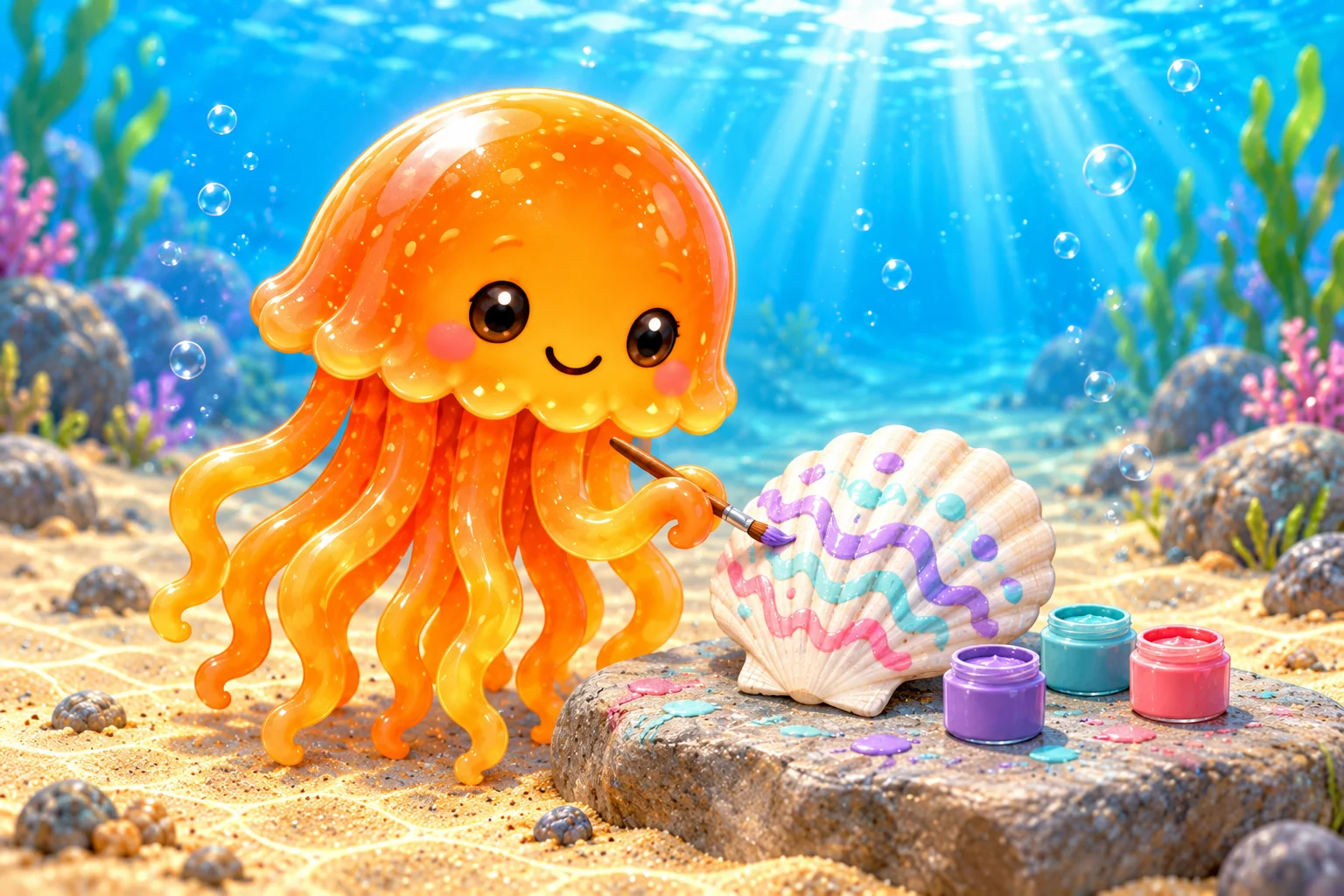
A small group idea
Make something everyone can use
At nursery or in Reception, try a shared paper-shell picture. Each child can add a mark, choose a colour, suggest where a shell goes or simply watch. Notice the different contributions without ranking them.
Try it with your group
- Give it a simple purpose: “Let’s make a picture for our reading corner.” Use large paper shapes and familiar art materials.
- Offer different ways to join: drawing, pointing, choosing, sticking with support or watching. Match the role to the child, not just their age.
- Describe a real contribution: “Alex held the paper while I attached it. That kept it still.” Invite children to notice another example, without requiring a round of public thank-yous.
- Return to the result: use the reading corner together and notice the picture. Children can see where their contributions went.
Children can pass or join later. Accept their usual language, signs, picture choices or communication device. Keep individual thank-you messages private unless the child wants to share them; do not make popularity charts or compare who gets the most thanks.
A free little adventure
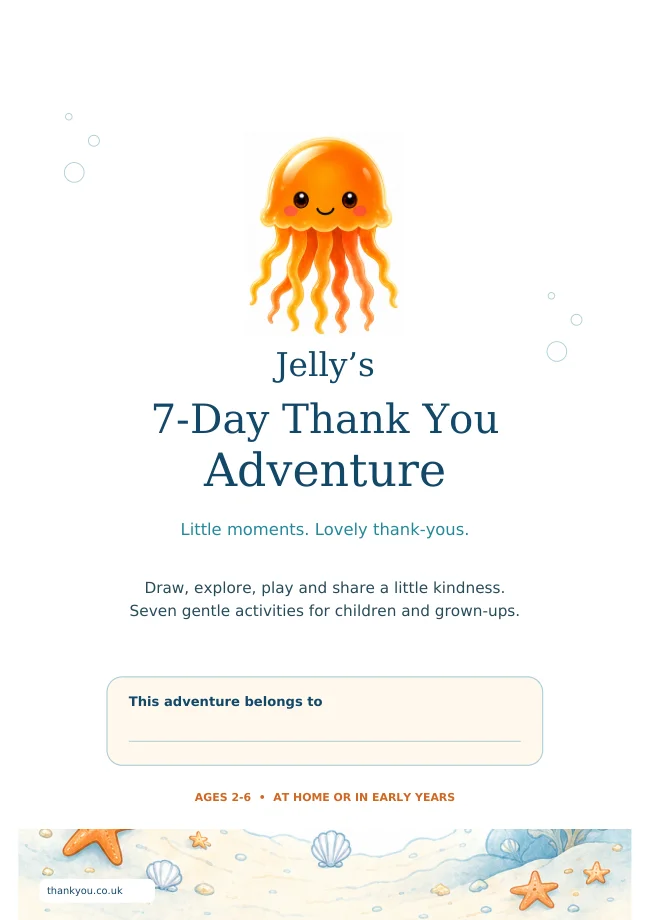
Seven days of little thank-yous.
Get seven playful activities and a keepsake certificate in our 10-page printable booklet. Draw, colour or talk together at your own pace.
Get the free challengeSign up by email on our homepage to receive the booklet.
From a story to a conversation
Read about gratitude and kind words
A picture book gives you a shared moment to talk about. Enjoy the story first; one question afterwards is plenty.
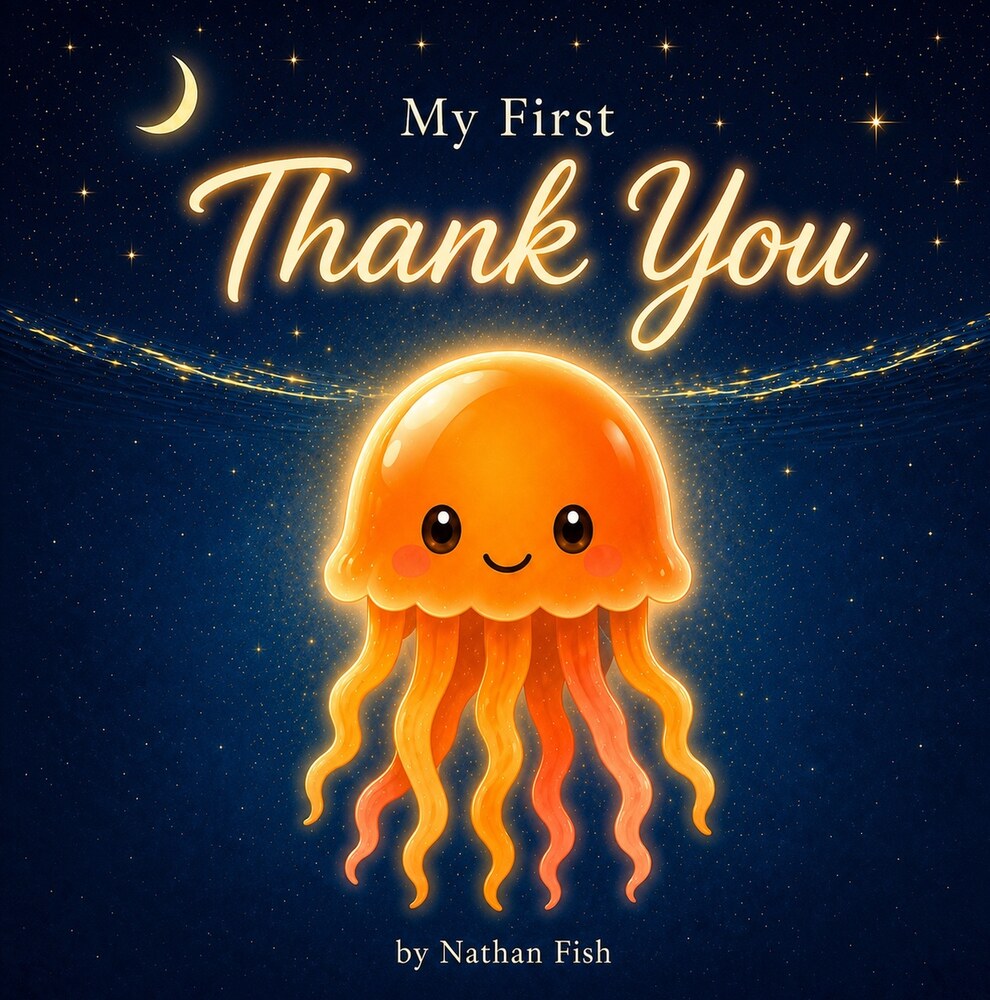 My First Thank YouA gratitude picture book for ages 2–6. Meet Jelly and explore everyday things to be thankful for.Look inside →
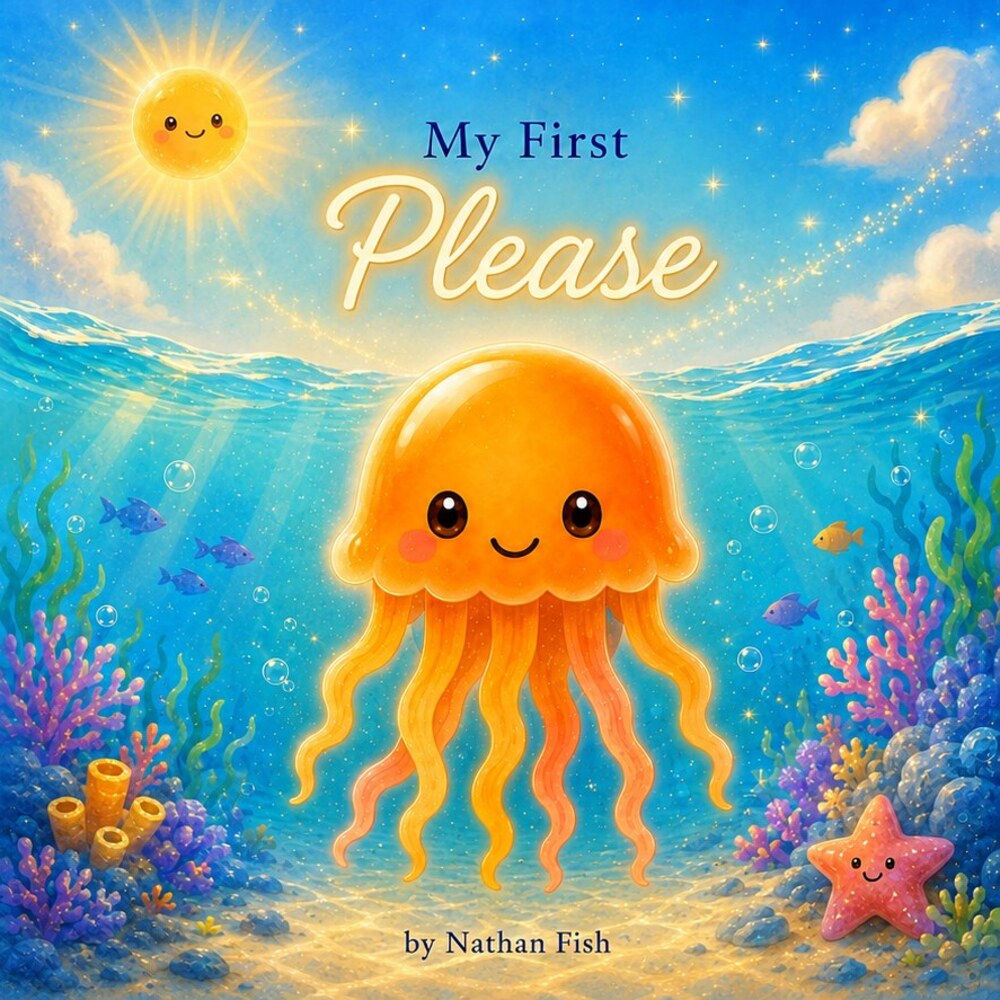 My First PleaseA manners picture book for ages 2–6, about asking kindly and remembering a little “please”.Look inside →
After My First Thank You, point to one pictured moment: “What happened here?” If your child wants to talk, follow their observation. After My First Please, let a toy practise asking for a turn—and waiting if the answer is “not yet”.